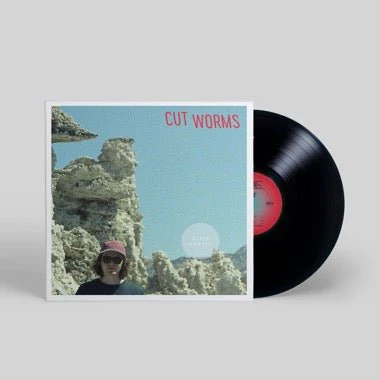
Alien Sunset
Cut worms is a command; if you say so - got a knife?
Cut worms is a crime scene; my god, who would do such a thing? Cover your eyes!
Cut worms is a gardening hazard; they feed at night! Treat with diatomaceous earth before they affect your beans.
Cut worms can mean many things, but today, most likely, Cut Worms means Max Clarke, singing up a storm for you on his new nightcrawler of an EP, “Alien Sunset.”
Some say, if there’s anything in the world you could be doing other than music, please god go do that thing. Well, Max Clarke could have done a number of things; after going to school for illustration, steering toward a career in graphic design, and taking some handy-man type jobs, he realized that songwriting, a pastime since he was twelve years old, was the only type of work that didn’t feel like just work. Writing and finishing songs had never been an effortless task for Max, more like a trip “through heaven and hell,” but he wanted to spend his mid-20s energy on something important and personal- and hey, a little hellfire is good for the complexion.
“Alien Sunset” is a collection of home-recorded “demos” from Max’s time living in Chicago (Side A) and New York City (Side B), written in spurts, like little designated creative coffee breaks. Following the example of a prolific roommate who had endeavored to write a song a day for a year and did so for FOUR years, Max decided to dedicate his daily hour of free-time after work to mindful musical regimen. He challenged himself to record two songs a month and release them online - for better or for worse, praise or criticism. Expecting little more than a few constructive comments regarding his 8-track fidelity, he was surprised by the positive reactions to his antique sound, classic voice, and Everly Brothers style close harmonies.
Each song on “Alien Sunset” has a sturdy, four-legged American quality, but also contains a gentleness and sense of stolen privacy. The arrangements are both dense and airy, decadent without sacrificing an ounce of effervescence. For sure, something about “Alien Sunset” looks back over time’s shoulder, but it isn’t really “retro” music - it just glitters in a way you don’t often hear these days.
If this collection can be said to have any sort through-line, a whiff of motif, it revolves around the obvious delight Max takes in singing his heart out, despite variegated agony. The lyrical work moves from simple, diary-like musings, self-consciousness on the dance floor and general lust problems, to illuminated text. As a lyricist, Max draws upon the Romantics and Symbolists of the rock and roll poet tradition; “Song of the Highest Tower” was written the day Lou Reed died and is an adaptation of a poem from Rimbaud’s “A Season in Hell.” The moniker itself, Cut Worms, borrows its striking and ambiguous imagery from a line in a William Blake poem: “The cut worm forgives the plow.”
For Max, making music is free passage back to the realm of ecstatic teenage feelings, and “Alien Sunset” is full of that intense, feels-so-good-to-feel-so-bad energy. Even when the lyrical content broods, the spirit sparkles, and Max’s emotive vocal performances bubble over with the tipsy dancing and diaphramic laughter of a writer lover fool who, having his wrestled his demons, hit his head upon a multitude of dead ends, and failed thrice and half times at self-immolation, has nowhere left to go but relief.
Product Information
Product Information
Shipping & Returns
Shipping & Returns
Description
Cut worms is a command; if you say so - got a knife?
Cut worms is a crime scene; my god, who would do such a thing? Cover your eyes!
Cut worms is a gardening hazard; they feed at night! Treat with diatomaceous earth before they affect your beans.
Cut worms can mean many things, but today, most likely, Cut Worms means Max Clarke, singing up a storm for you on his new nightcrawler of an EP, “Alien Sunset.”
Some say, if there’s anything in the world you could be doing other than music, please god go do that thing. Well, Max Clarke could have done a number of things; after going to school for illustration, steering toward a career in graphic design, and taking some handy-man type jobs, he realized that songwriting, a pastime since he was twelve years old, was the only type of work that didn’t feel like just work. Writing and finishing songs had never been an effortless task for Max, more like a trip “through heaven and hell,” but he wanted to spend his mid-20s energy on something important and personal- and hey, a little hellfire is good for the complexion.
“Alien Sunset” is a collection of home-recorded “demos” from Max’s time living in Chicago (Side A) and New York City (Side B), written in spurts, like little designated creative coffee breaks. Following the example of a prolific roommate who had endeavored to write a song a day for a year and did so for FOUR years, Max decided to dedicate his daily hour of free-time after work to mindful musical regimen. He challenged himself to record two songs a month and release them online - for better or for worse, praise or criticism. Expecting little more than a few constructive comments regarding his 8-track fidelity, he was surprised by the positive reactions to his antique sound, classic voice, and Everly Brothers style close harmonies.
Each song on “Alien Sunset” has a sturdy, four-legged American quality, but also contains a gentleness and sense of stolen privacy. The arrangements are both dense and airy, decadent without sacrificing an ounce of effervescence. For sure, something about “Alien Sunset” looks back over time’s shoulder, but it isn’t really “retro” music - it just glitters in a way you don’t often hear these days.
If this collection can be said to have any sort through-line, a whiff of motif, it revolves around the obvious delight Max takes in singing his heart out, despite variegated agony. The lyrical work moves from simple, diary-like musings, self-consciousness on the dance floor and general lust problems, to illuminated text. As a lyricist, Max draws upon the Romantics and Symbolists of the rock and roll poet tradition; “Song of the Highest Tower” was written the day Lou Reed died and is an adaptation of a poem from Rimbaud’s “A Season in Hell.” The moniker itself, Cut Worms, borrows its striking and ambiguous imagery from a line in a William Blake poem: “The cut worm forgives the plow.”
For Max, making music is free passage back to the realm of ecstatic teenage feelings, and “Alien Sunset” is full of that intense, feels-so-good-to-feel-so-bad energy. Even when the lyrical content broods, the spirit sparkles, and Max’s emotive vocal performances bubble over with the tipsy dancing and diaphramic laughter of a writer lover fool who, having his wrestled his demons, hit his head upon a multitude of dead ends, and failed thrice and half times at self-immolation, has nowhere left to go but relief.